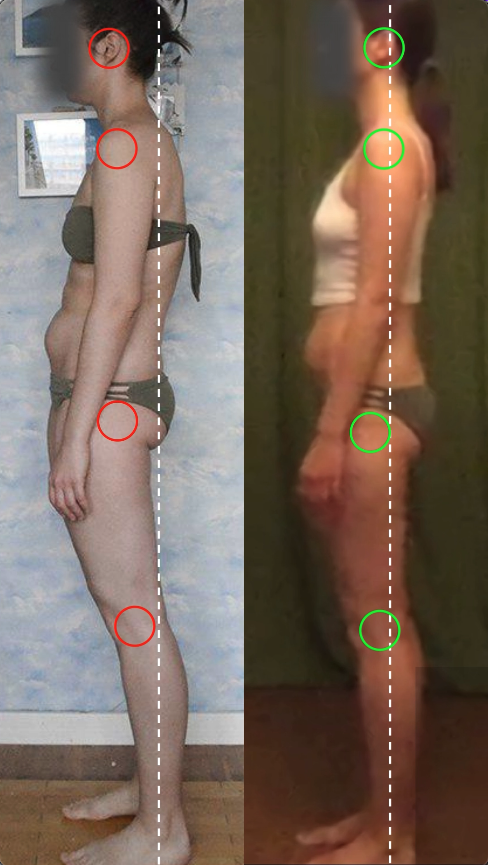
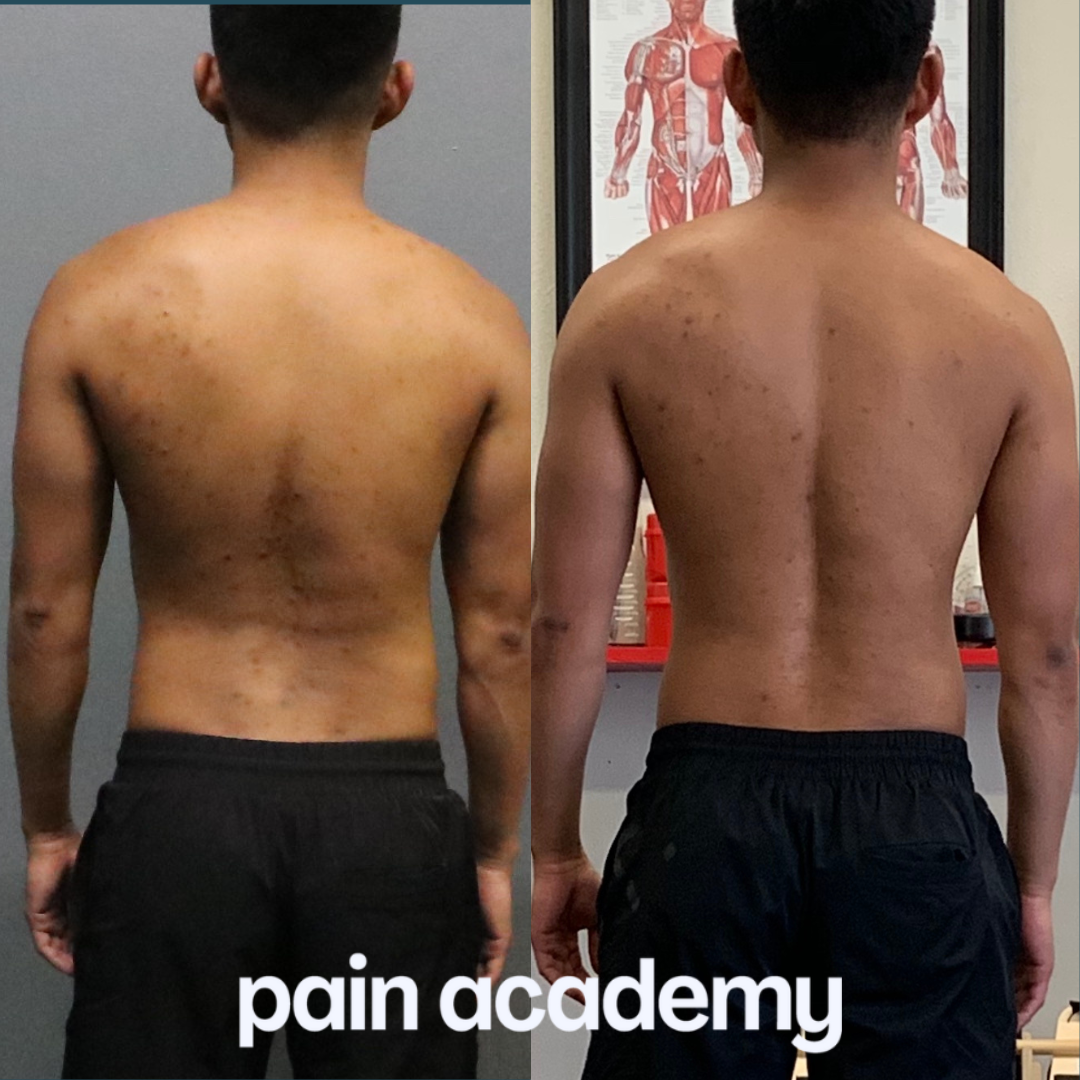
Maya · Scoliosis at fifteen
A 24-degree curve in early teens. The doctors said watch and wait. The fear weighed more than the curve.
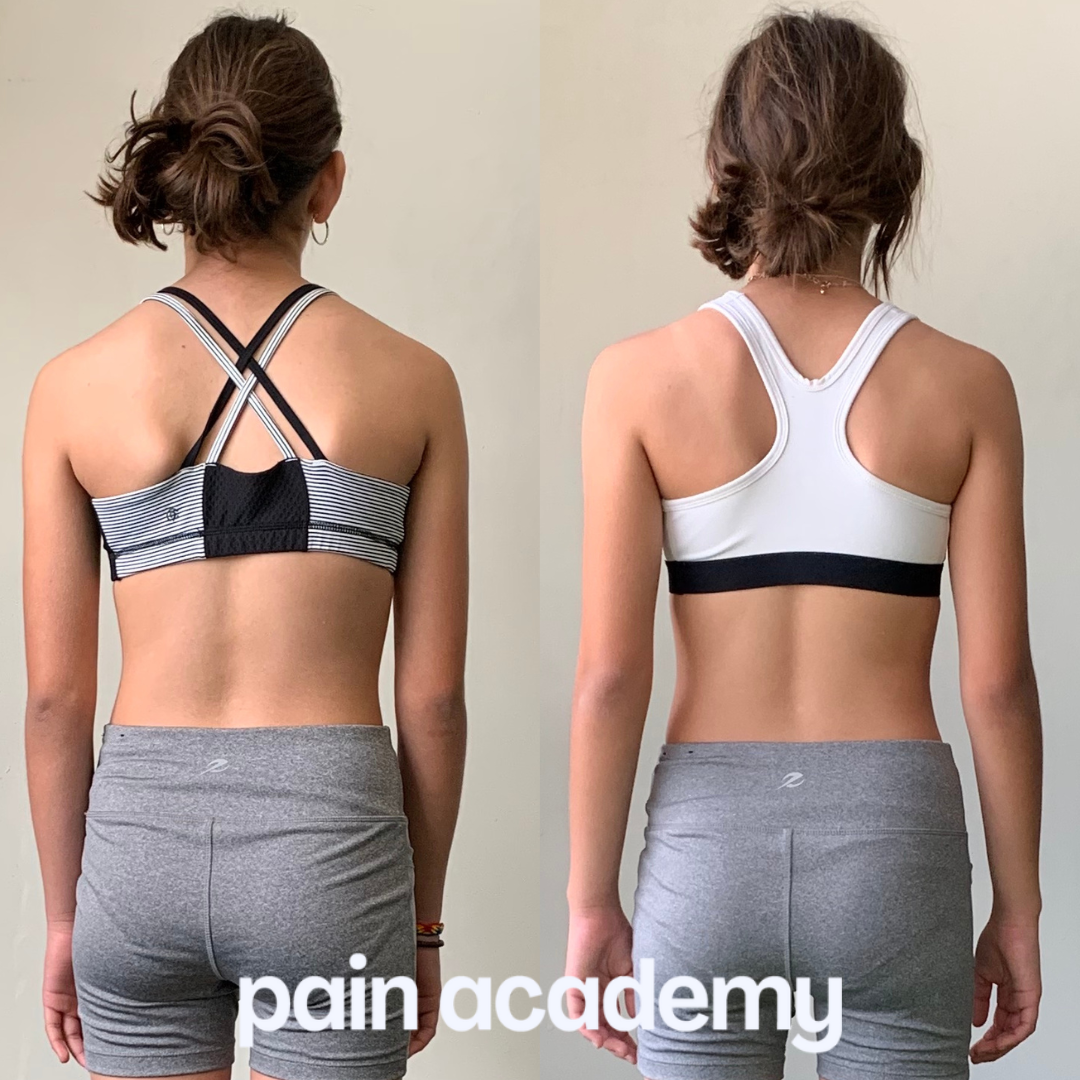
When Maya first came to us, her scoliosis wasn’t considered severe. Her curve measured 24 degrees, which to most doctors meant observation, monitoring, waiting, nothing urgent. But Maya wasn’t experiencing her body through the eyes of a doctor. She was experiencing it through the eyes of a teenage girl. At an age when most kids are becoming aware of how they look and how they’re perceived, Maya was handed a diagnosis that immediately changed the way she saw herself. The curve wasn’t causing much pain, the fear was, and over time that fear became heavy.
- Annual observation appointments
- Doctors monitoring the curve and waiting
- Being told the curve was “mild,” nothing urgent yet
- Living with the quiet weight of “what if it gets worse?”
- Built strength and confidence alongside the structural work
- Learned how to move and what her body was actually doing
- Stopped seeing her scoliosis as evidence she was broken
- Practiced consistently, watching her curve drop from 24° to 13.5°
“I stopped seeing my body as something to hide, and started seeing it as something I could trust.”
Her strength improved. Her movement improved. Her confidence improved. Her curve reduced from 24 degrees to 13.5 degrees. But the biggest win was watching Maya stop hiding. She stood taller, moved more freely, and carried herself differently, not because someone told her she was fixed, but because she stopped believing she was broken.
A curve is not a character flaw. It’s not a prediction of your future. And it’s not the most important thing about you. The biggest shift wasn’t Maya’s spine, it was the story she was telling herself about her body. When that story changed, everything else could begin to change too.
Where would
your story start?
Take the 60-second placement test. We’ll show you exactly where to start.
Read another story