Reggie · Severe scoliosis, no pain
A severe curve on the X-ray, no pain at all. Reggie came in because his body felt imbalanced.
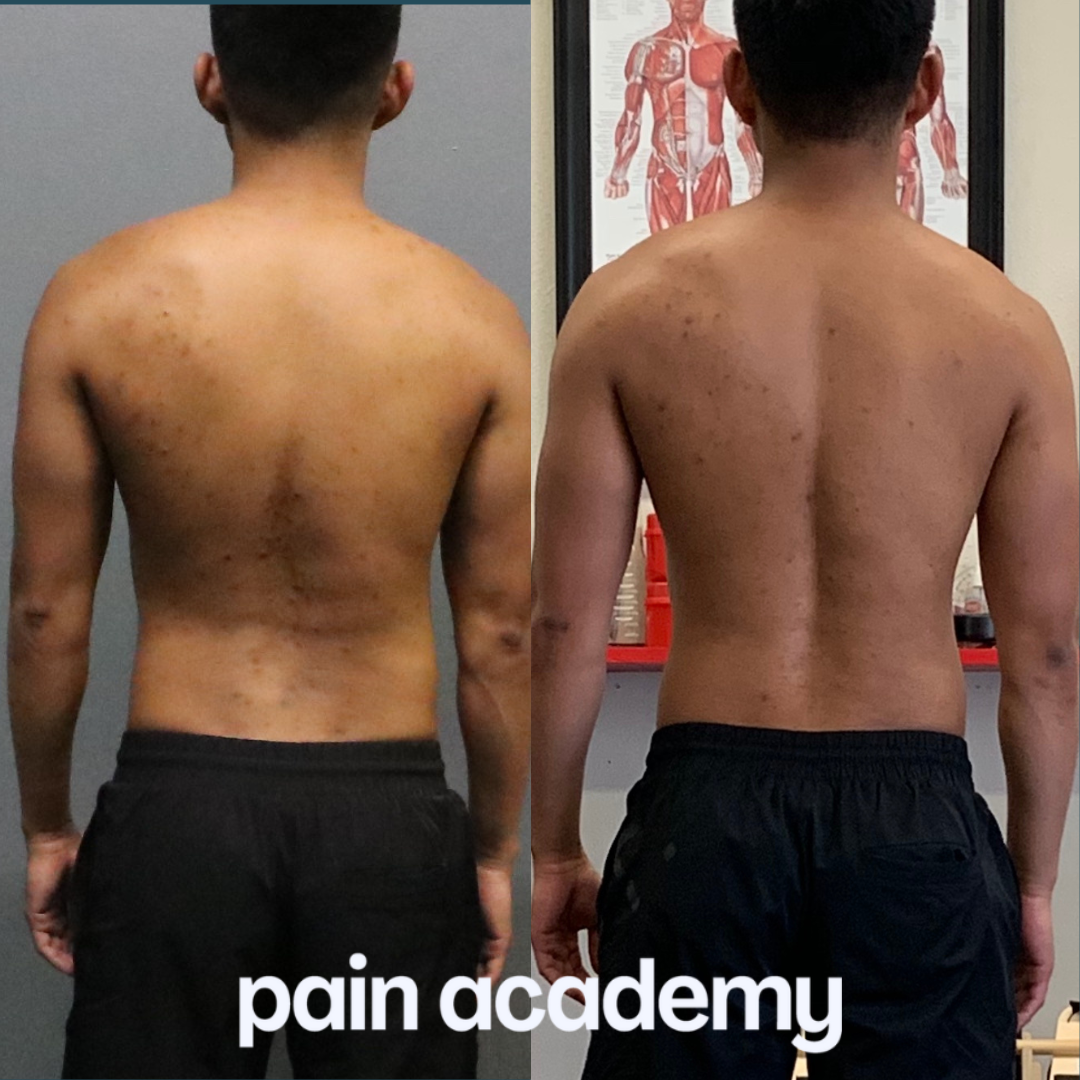
If you looked at Reggie’s spine, you might assume he was in pain. His scoliosis was significant, and even standing still, the asymmetry was obvious. But Reggie wasn’t coming to us because of pain. He’s a nurse, on his feet for long days, lifting patients and moving equipment. His body could still do the job, but he could feel the imbalance, one side moved differently than the other, one side felt stronger, the other disconnected. He didn’t trust his foundation.
- Pushing through long shifts despite the imbalance
- Avoiding certain movements his body didn’t trust
- Loading one side more than the other, working around the problem
- Years of compensations the body had quietly normalized
- Restored movement options on both sides of his body
- Improved coordination so the system stopped over-relying on the same compensations
- Helped his body share the workload more evenly between sides
- Stayed consistent with the daily practice instead of chasing the curve
“I wasn’t in pain. I just wanted to feel balanced again, to trust both sides of my body.”
Little by little, things began to change. His movement smoothed out. His balance improved. His confidence returned. As his body learned new strategies, even the curve itself began to relax, not because we were chasing it, but because the system underneath it was finally functioning better. Today, Reggie is lifting, moving, training, and working with a level of confidence he hasn’t felt in years.
Reggie is proof that structure doesn’t always equal pain, and relief doesn’t always come from “fixing” the spine. Sometimes the body isn’t asking to be fixed, it’s asking for better options, better movement, better balance. His body had been doing its best with the tools it had. Once it was given better tools, it responded.
Where would
your story start?
Take the 60-second placement test. We’ll show you exactly where to start.
Read another story